
Harvard Online
2026
Reinventing the Organization with AI
Industry expert for a course on scaling AI strategically, safely, and sustainably.
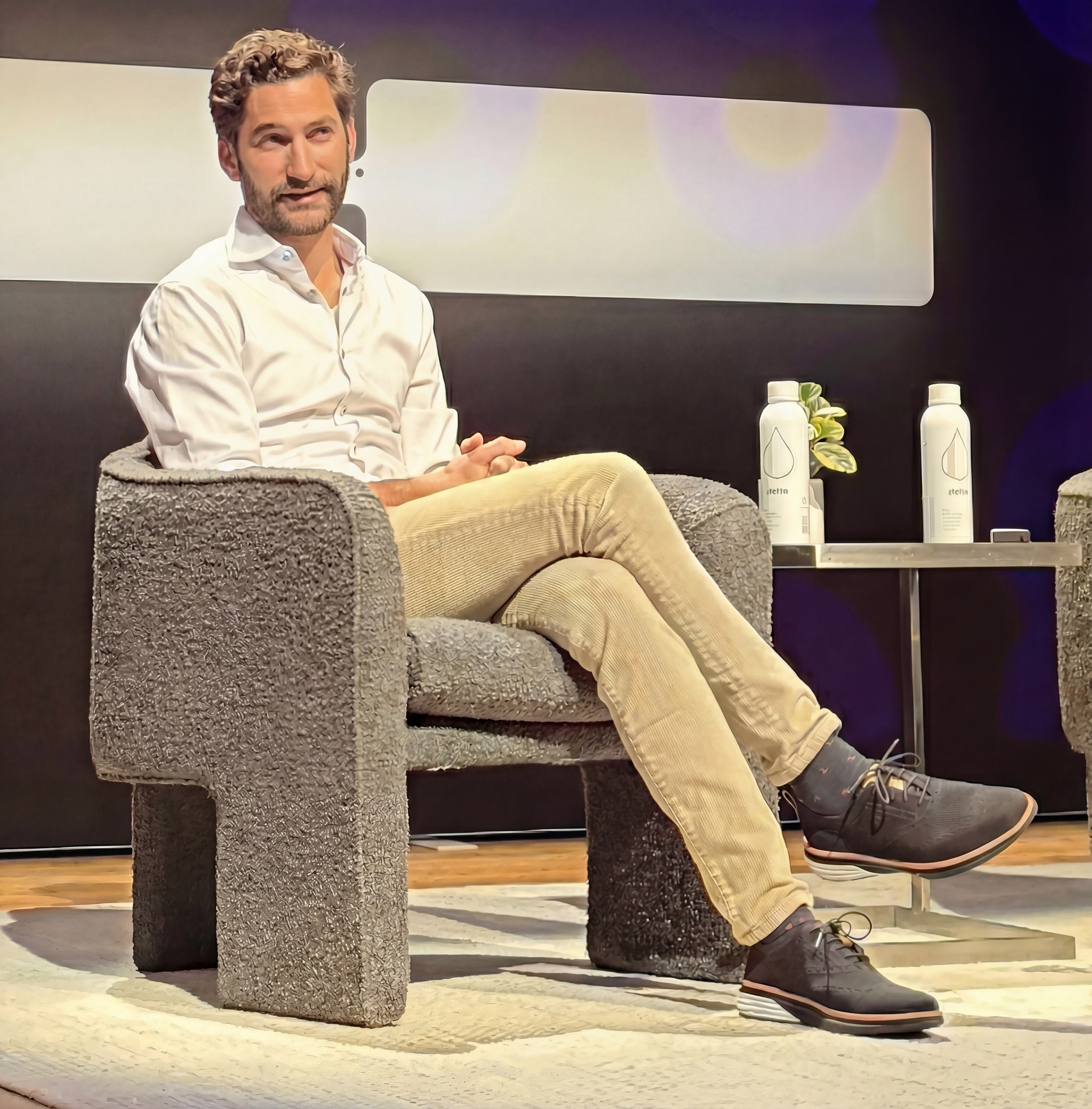
VP, Global Head of AI
Colgate-Palmolive
As VP & Global Head of AI at Colgate-Palmolive, I lead AI transformation across the organization. I founded and lead the company's first Global AI organization, focusing on enterprise-scale deployment, governance frameworks, and organizational change management.
Success comes from combining strategic direction with distributed innovation. Provide teams with the right tools, training, and trust — they'll find opportunities you never expected. — The AI Journal, 2025
I earned my PhD in Chemistry from Princeton University, where my research sat at the intersection of first-principles theory with the world's most important chemical process — synthetic fertilizer production. That background shaped how I approach problems: from fundamentals, with rigor.
The best AI work starts with the problem, not the technology. Scientists and engineers sit with stakeholders, design new processes together, then roll up their sleeves to build and deploy. Pair that with the right governance and strategy, and AI adoption becomes sustainable. Not because you mandated it, but because you reduced the friction between people and the tools that make them better at their jobs.
My research started in computational thermodynamics — connecting theory to the mechanistic understanding that drives catalyst design. In industry, that evolved into building ML models that predict thermochemical properties of formulations using creative feature engineering rooted in physicochemical principles. Most recently, using LLMs to simulate consumer panel results at scale. The through-line: using models to understand and predict complex systems.
I Pappas et al.
Presents semantic similarity rating (SSR), a method for simulating consumer research using LLMs. Tested on 57 personal care product surveys (9,300 human responses), SSR achieves 90% of human test-retest reliability while maintaining realistic response distributions (KS similarity > 0.85).
I Pappas, B Luczynski, D Wu, DH Kim
T Brinzari, M Stranick, CY Cheng, Z Hao, I Pappas, G Marron et al.
I Pappas, B Luczynski, D Wu, DH Kim
Machine learning model for predicting properties of chemical compositions based on chemoinformatic properties and ingredient interactions.
T Brinzari, M Stranick, CY Cheng, Z Hao, I Pappas, G Marron et al.
M Fitzgerald, I Pappas, JF Gaillard, MA Corvalan
ML-driven system for producing personal care products using chemoinformatic property prediction.
Compositions with insoluble zinc and stannous compounds for gingivitis, plaque, and caries prevention.
XAS method for quantifying and evaluating metal ion speciation in dentifrice formulations.
A Ahuja, I Pappas, A Potanin
ML model for determining chemical composition properties from chemoinformatic inputs and experimental measurements.
Predictive model incorporating characteristic-of-interest filtering for targeted product formulation.
ML-based determination of chemical composition properties from chemoinformatic inputs.
Computer-implemented ML method predicting properties including pH, rheology, abrasivity, chemical degradation, phase change, turbidity, ingredient solubility, volatile loss, and consumer perception.
TP Pabst, JV Obligacion, É Rochette, I Pappas, PJ Chirik
CP Myers, I Pappas, E Makwana, R Begum-Gafur, N Utgikar, MA Alsina et al.
Aluminum chlorohydrate salt with ≥50 mol% Al30 polyhydroxyoxoaluminum cation.
Method for manufacturing fluid gels with metal cation addition and pH control.
Al30 polyhydroxyoxoaluminum cation as predominant species in antiperspirant actives.
MJ Bezdek, I Pappas, PJ Chirik
Conversion of Al13 to Al30 polyhydroxyoxoaluminum cations via controlled heating.
Oral compositions with basic amino acid and sesquiterpene alcohol.
WN Palmer, JV Obligacion, I Pappas, PJ Chirik
I Pappas, PJ Chirik
Twelve N-H bond dissociation free energies measured or calculated. Catalytic synthesis of ammonia accomplished using H₂ as the stoichiometric H-atom source, providing the thermochemical foundation for NH₃ synthesis by PCET.
≥90% Al30 as predominant species detectable by ²⁷Al NMR.
JV Obligacion, SP Semproni, I Pappas, PJ Chirik
I Pappas, S Treacy, PJ Chirik
Redox-active ligands promote a distinct mechanistic pathway from platinum catalysts. Hydrosilylation of 1-octene with triethoxysilane on 10g scale with 96% yield and >98% selectivity — a reaction performed commercially at >5,000,000 kg/year.
I Pappas
Ph.D. Dissertation. Advisor: Paul J. Chirik.
CH Schuster, T Diao, I Pappas, PJ Chirik
JM Andjaba, JW Tye, P Yu, I Pappas, CA Bradley
I Pappas, PJ Chirik
Catalytic hydrogenolysis of the titanium–amide bond to yield free ammonia. N-H BDFEs of coordinated NH₃ decrease by >40 kcal/mol from the free gas phase value.
JV Obligacion, JM Neely, AN Yazdani, I Pappas, PJ Chirik
S Yuan, J Vaughn, I Pappas, M Fitzgerald, JG Masters, L Pan
WN Palmer, T Diao, I Pappas, PJ Chirik
Novel delivery form using cation/zwitterion carrier with hydrogen bond donor.
I Pappas, PJ Chirik
I Pappas, PJ Chirik
ML Scheuermann, SP Semproni, I Pappas, PJ Chirik
Eutectic mixture carrier system for antiperspirant actives.
Aqueous formulation with basic amide/amine mixture.
SE Smart, J Vaughn, I Pappas, L Pan
XL Liu, I Pappas et al.
XL Liu, I Pappas, M Fitzgerald, YJ Zhu, M Eibling, L Pan
I Pappas, M Fitzgerald, XY Huang, J Li, L Pan
New zirconium glycine crystals isolated and characterized by single-crystal XRD with in situ DLS monitoring.
Doctor of Philosophy in Chemistry
Princeton University, 2012–2016
Advisor: Paul J. Chirik
Bachelor of Arts in Chemistry
Rutgers, The State University of New Jersey, 2005–2010
Summa Cum Laude, Minor in Philosophy
Fundamental studies of dinitrogen (N₂) fixation using group 4 transition metals (titanium, zirconium, hafnium), addressing one of chemistry's grand challenges: converting atmospheric nitrogen into usable compounds through synthetic catalysis. The work explored mechanistic pathways for sustainable ammonia synthesis via proton-coupled electron transfer (PCET), demonstrating how earth-abundant metals can replicate biological nitrogen fixation.
Additional research developed nickel-catalyzed hydrosilylation using earth-abundant metal catalysts as replacements for platinum in industrial silicone manufacturing.
Princeton University, 2016 — Exceptional Graduate Research in Chemistry
Princeton University, 2016 — Excellence in Undergraduate Instruction
Rutgers University — Outstanding Academic Achievement in Chemistry
Featured writing, conversations, and teaching on AI strategy, enterprise transformation, and organizational change.
2026
Reinventing the Organization with AI
Industry expert for a course on scaling AI strategically, safely, and sustainably.
March 2026
“The Evangelist Teaching a 220-Year-Old Toothpaste Maker to Embrace AI”
Feature profile on scaling AI adoption inside a legacy consumer-goods company.

August 2025
“AI at Work: Democratizing AI to Deliver the Greatest Business Impact”
Authored article exploring enterprise AI-democratization strategies.

March 2025
“Companies’ Biggest Barrier to AI Isn’t Tech — It’s Employee Pushback”
Quoted on strategies for overcoming organizational resistance to AI adoption.

January 2025
“The GenAI Focus Shifts to Innovation at Colgate-Palmolive”
Featured on Colgate-Palmolive’s shift toward innovation-focused GenAI deployments.

May 2024
“Employees Don’t Have to Finish Last in the AI Race”
Quoted on strategies for employee-centric AI transformation.

May 2023
“AI Can Help You Ask Better Questions — and Solve Bigger Problems”
Quoted on leveraging AI to enhance problem-solving capabilities.
Reflections on some of the books I've read.
Kli’s reflection
Can't say it better than Annie Dillard. "Say you have seen something. You have seen an ordinary bit of what is real, the infinite fabric of time that eternity shoots through, and time's soft-skinned people working and dying under slowly shifting stars. Then what?"
Kli’s reflection
The stuff dreams are made of. Very slow at first. Almost painfully slow. Then boom, wonderous admission into the wildest dreams of Carl Sagan. I feel like the pace of the book is a metaphor for scientific research.
Kli’s reflection
The best fiction I've ever read. I feel like the characters live on perpetually... The book is long. But life is long. There are lots of characters - but you meet lots of people in life.
Kli’s reflection
Hard to not get completely engrossed. Great story, universe. Not deep or philosophical & not meant to be. More Epic fantasy than sci-fi. If star wars was an awesome book, this would be it.
Kli’s reflection
I find myself constantly thinking of this book when reading other later novels that take place in an Galactic universe. It is literally a foundational book.
Kli’s reflection
A Cyberpunk 'thriller'. An exciting read. Pretty amazing how much of the technology hypothesized actually exists now.
Kli’s reflection
"So it goes... Holy cow. A mind blowingly good book. A total mash up of emotions, facts, the human experience, fate, death, chance, luck, and harsh realities."
Kli’s reflection
Really enjoyed this book. Funny, exciting, awesome vision of a distopian corporate-orgy-post-national society. I thought the idea of a 'verbal virus' was a great premise and I'm waiting for the metaverse incarnate to come into existence.
Kli’s reflection
Maybe its my soft spot for stories about interstellar war, but I loved this book. The quintessential example of how one concept, pulled right out of physics, could shape an entire reality and make a great story.
Kli’s reflection
Machiavelli has a popular reputation as a shrewd jerk but it is really just a book about practicality. Must read before becoming a corporet exec. Could be renamed, 'Stories about what will and wont make people hate you'
Kli’s reflection
"We did not domesticate wheat, It domesticated us." His main arguement is that humans have the distinct ability to beleive in shared fiction- religion, money, laws, politics, etc.
Kli’s reflection
The most interesting idea in this book is that the gap from dumb to superintelligent will be traversed extremely rapidly once the few missing pieces fall into line. We won't have time to watch it coming.
Kli’s reflection
A history written through many stories. I found myself thinking like a spy in my everyday life. Incredible how the killing of a few people can alter history and how knowledge of that fact was put to practice in incredible operations.
Kli’s reflection
Long, Dull, Detailed, and essential to read. A complete description from first principles about justice, good, evil, etc about how a society should be ordered and run. A powerful (but dangerous if quoted literally) moral compass.
Kli’s reflection
A brutally honest book told from the German perspective of WWI. Such vivid and visceral descriptions of one of the most extreme experiences in human history. There is no glory in this book. No redemption.
Kli’s reflection
Wouldn't know how to classify this book. It swings wildly between extraordinarily detailed non-fiction... and the fantasy realm of purgatory. Perfect ending. What happens? Who knows? Not for the book or characters to say or divulge.
Kli’s reflection
Holy cow this book was funny. I laughed out loud many times. I would read again in an instant. Especially gratifying to read after Foundation, which this book is satirically based on.
Kli’s reflection
A truly epic story. The difference between the movies and the books is like the difference Dr. Seuss and Grimm's fairy tales magnified by 100.
Kli’s reflection
Is this sci-fi, philosophy, social comentary, or a math book? It continues to provoke thought even months after reading. You just can't know. You could never know. It's not even worth considering hyperspace, which is why we don't, which is the point of the book.
Kli’s reflection
A long book. Maybe a little hard at first to get a foothold b/c of the complexity of the story and technical matter, but it goes smoothly after the 1st third and is well worth the investment. Great book - Coherent despite the disjointed time. Also learned a lot about cryptography.
Have a question or want to get in touch? Drop me a note below.

Ask about research, AI work, publications, or books